Tuesday, April 10, 2018

Lesson Reflection

Everyone did an awesome job presenting tonight! I know it's not easy, but we got through it! Listening to all of y'all's lessons really got my brain rolling with ideas. I think I was over thinking activities I could do, but tonight I realized it's really not as hard as I'm making it.
Tonight, I presented my lesson to the class. I did my lesson over "Flamingo Teamwork." One suggestion I had from Professor Steffes is that I can show a live feed of Flamingos from the Chicago Zoo. I think this would be a great addition to my lesson, and would really capture my student's attention. I didn't find the one from Chicago, but one from the zoo in Houston! Here is is if you would like to check out some flamingos :)
Houston Zoo Flamingos

Image result for flamingos

Monday, April 2, 2018

Evaluation of a Lesson


First off, sorry this is getting posted so late! I have been out of town and busy prepping for a midterm in my other class! I also couldn't find the powerpoint in D2L with the list of requirements for a lesson. I looked at a couple of your all's blogs and Kate had a list of them! (Thanks Kate! :)  )

So... I have not started on my lesson plans yet, but have a few ideas floating around in my head. I'm a super procrastinator, something I'm trying to get better at, so I'm going to make up a lesson with an objective on the fly for this post. 

The objectives I'm grading this lesson on are: 
     □ Includes accurate information
     □ Learning objective met
     □ Appropriate to audience
     □ Interesting to age group
     □ In good condition
     □ Employs creative thinking
     □ Motivating and engaging

In one of my lessons, I am planning on doing a review over parts of a newspaper article. It will look something like this:

Parts of the Newspaper…I couldn't get to the blog…but what a great bulletin board!The objective will be:
The students will be able to label the parts of a newspaper article, using a word bank, with 95% accuracy, independently. 

Before hand, we will fill out a KWL chart about newspapers.

First Grade Class
The lesson will be us as a class talking about the parts of a newspaper. I will have pieces to tape/drag onto the poster to show where the correct placement for it is. This is kind of like a bubble chart (is that a stretch?). Hopefully I can get away with using something like this and calling it a bubble chart because it does have a center topic and bubbles coming off of it. Let me know if you think that would work.

 We have some newspaper articles around our school hanging up, and I don't think a lot of kids know how to read one, or where to find certain things. That is what this activity is centered towards. 

Overall, I think this lesson meets the criteria. It displays accurate information after we discuss as a class, I believe their learning objective will be met, it is on grade level for first graders, in good condition, and is engaging. I don't know if it employs creative thinking, though. Maybe if their assignment was to create their own newspaper front page, would it be considered creative.

Friday, March 23, 2018

Lil' bit of everything

Strategies:
The one strategy that I really liked from class was the "Written Conversation" activity. I used to write notes in class when I was in middle school, and I wish that they were still a thing! I feel like doing this activity just brings me back to my younger days and it makes me excited! I liked how it gets them off of the technology and makes them stop talking for a second. They get to work on their writing, while talking about things they have learned. I just think it's all around a good activity to use as an opener, a mid-lesson checkup, or a exit slip! (I couldn't really find an example but y'all know what notes look like!)
The other strategy I really liked was the "Quick Write" and the website we used to do this, www.padlet.com . I think it's similar to the written conversations activity in the way that it's a quick activity to do to summarize information and talk about what you've learned. If Ipads are something your classroom has, there is an app you can download, and you can use this activity pretty frequently. If not, you could totally do this on paper and set a timer for a couple of minutes and collect them. Maybe you can make a journal dedicated to quick writes if that's something you plan on doing often!
Some examples might be:
"If you were president, what would be the first law you would make?"
"What did you learn about the water cycle yesterday?"
"What was the turning point for the civil war?"


Thinking Maps:
So a lot of these a kind of similar. They are all ways of organizing information so it's nice and neat. It can also teach students ways to think about certain topics if they ever need something to help them organize information. I still use bubble charts if I'm going to write a paper just to give me an idea of the main points I'm writing about. Teaching your students thinking maps gives them strategies they can use for the rest of their lives. we see flow maps when talking about things going on in a company, and we see multi-flow maps when dealing with cause and effects. Overall, I think teaching students thinking maps is something that we need to do to prepare them for the future!

Image result for thinking maps

Friday, March 16, 2018

Strategies Take 2

The first strategy I liked from tonight's class was the Analogy Chart. I liked how it had you compare two concepts and it had you give a summary of the new concept. It also has you compare what is similar and different about the two concepts. It gives students a chance to relate a new concept, to something they already know. We can use these in reading, math, science, social studies, and writing. This would be a good sheet to help them brainstorm their writing topics for a paper.
Related image
Image result for comparing two concepts


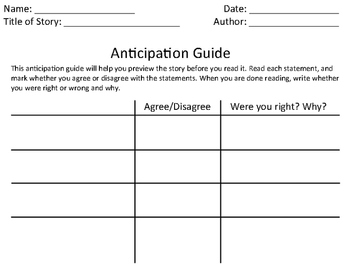
I also liked the anticipation guides. I think this is a good way to test their prior knowledge, as well as what they learned after the lesson. We could use this in a math lesson plan to test if they knew the vocab terms before we learned them.
Image result for anticipation guidesRelated image

Tuesday, March 6, 2018

Start your engines!

This is my second class with Professor Steffes, and I am looking forward to learned more about how to teach reading in my classroom. I believe that reading is so important and one of more important building blocks at school, and in life. If you can't read, then life is going to be hard for you unfortunately. It's our jobs as teachers to not let our students fall behind and fall through the cracks when it comes to reading.
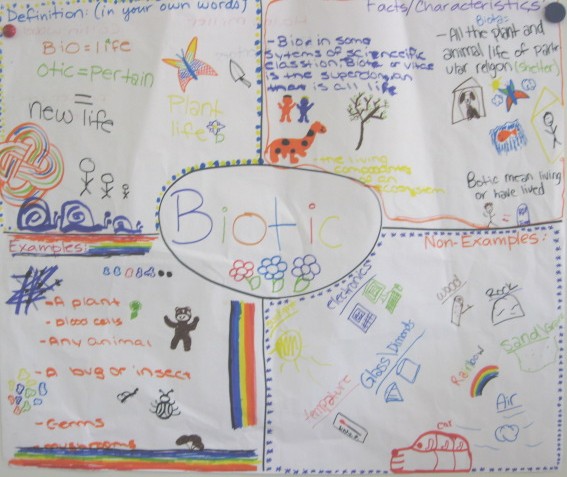
This week in class, we talked about three ways we can help our students with reading; the Jigsaw Activity, Frayer Model Strategy, and the Choice-board. For this post, I am going to focus on the Frayer Model Strategy (FMS).
Image result for frayer model strategy
This strategy looks at one single word. From that word, you have to state the definition, characteristics, examples, and non-examples. Doing this gives you a deeper understanding of that word, as well as answer any question you may have had about that word. I personally really like this approach and can see myself using this in a classroom. One way it could be used is by writing words, or by drawing pictures in each of the boxes to give students a visual. This gives students a chance to really think about a word and what they know about it. Here are some examples I found. 


Related image

Image result for frayer model strategy examples elementary school

Wednesday, December 6, 2017

6, 6, 6!

Devyn Crabtree:
I love Kahoot! I think that's such a fun idea and it's something different from doing a paper and pencil test. I also thought your use of the snowball activity. Having them add something each time is a great idea. What exactly is a Frayer Model? <-- one of my question while watching, but you covered it in the end! The explanation might be helpful to include in the beginning of your lesson.

Me!
Hope you all enjoyed my lesson plans! Hopefully I can fix anything I need to and get theses knocked out!

Karen Bond:
Props to you for choosing science as your lesson! And for middle schoolers! Science is not one of my strong suits. Overall, your lesson is very detailed and sounds very thought out. I don't remember learning about the periodic table in middle school, but maybe if I had, it would've made chemistry easier when I got older.

Wednesday, November 29, 2017

Round 5... Are we done yet?

Devin Shrum:
Sometimes technology sucks! Sorry this happened for you. I liked your bubble map difference/similarity for the North and South. I don't think I've ever used one like that, but I think this would really work with students so they can compare and contrast the two. I think doing a "snow storm" is a great way to get kids out of their seats, and interested in learning the subject. It also tests their knowledge to see how much they know. Overall, great lesson!


Sunday, November 26, 2017

LP Round 4

Clint:
I think that your remedial work fits well with your lesson, and would be helpful to students. I also think that the graphic organizer you choose to use is a great way for students to organize their thoughts into boxes that fit.Your power point looks very nice and interesting. The pictures are engaging and seem like they would grab/keep the student's attention. Overall, nice work on your lesson plans!


Hope everyone had a great Thanksgiving break!

Wednesday, November 15, 2017

Lesson Presentations Round 3

Tiffannie Nitcher:
I love how you broke down your time, and showed how you're using it! I may have to borrow that idea. That video, "Froggy, Froggy" was really cute and catchy. I think it will work great for third graders to help them remember the life cycle of frogs. Your modifications made for students was really nice. I liked the idea of having cards for them to have a visual reference, and also having it available in another language is great.

Carman Seay:
I like your lesson plan and the fall theme! I think it's going to be really interesting to see what kind of fall word problems they can come up with and seeing what their classmates think of their friend's problems.

Linsey Johnson:
I think it's interesting that you're having them write their own version of 3 Little Pigs. What are you going to do if they come up to show you their story, and it's the same as the original? I think having them create a story map for both versions will be helpful for them to see the differences. A suggestion to include technology would be to let them listen to the book via a youtube video as a different media. You could also have them create an online story they could save using an online story book. The website the school I work at uses is: https://www.carnegielibrary.org/storymaker/embed.cfm . You could also show them two different versions of the same story: https://vimeo.com/88337605 and https://www.youtube.com/watch?v=eXybaW9PM_M&feature=youtu.be to show them how they could be written differently.

Sara Houston:
That website looks awesome! I wish that was something that I could have done when I was in school. Your final project sounds really interesting. I think I did something similar when I was in 7th grade. Can't say I remember the land forms I used, but I do remember creating my own island with a partner!

Gabi Berry:
I love Pete the Cat! Overall, I think you have a great lesson plan. It seems very detailed and to sounds like you know what you are doing!


Wednesday, November 8, 2017

Lesson Presentations Round 2

Crystal Richardson,
I commend you for choosing middle school science for your content area! I was always one that struggled in science in school unless it was something math related, like Physics or Chemistry. Your first lesson sounds really fun and interesting! Something a non-science kid wouldn't mind doing :)

Michelle Perry,
I love second grade! One of the areas I would like to teach in. I'm sorry you had so many difficulties tonight! I think fun math sheets are a great way to get kids to engage in math. It might make them feel like they aren't even doing math...

Carman Seay,
Your presentation was so cute! What exactly is the app Frontrow again? I heard you mention it, but I didn't catch what exactly it was. Overall, I think your lesson plan is really thought out and very detailed. I think students would succeed after you would teach this lesson.

Wednesday, November 1, 2017

Lesson Presentations Round 1

Amanda,
  I really liked your presentation! The lorax is so fun. I loved the idea of them wearing hats and using lorax pencils. It's really a good opener to get their attention. 
  On your second lesson, Flipgrid sounds like a very practical use of technology. I'm interested to look it up and learn more about it. I feel like it's something that could be integrated into multiple subject areas!

Douglas,
  Kahoot was a great idea as an opener and pre-assessment! I've always loved using kahoot. I also liked how you paired the students with people who succeeded with people who needed some extra help in your first lesson. I didn't get to see much of your second lesson because I kept getting kicked out but I'm sure it was great!

Christina,
  The "Five Senses Song" was really catchy! I feel like it will really help them learn their senses. I think your activities are very cute and age appropriate. I'm sure they will love trying all these things t discover and learn their senses!

Sunday, October 29, 2017

Thinking Maps


For my Unit Lesson Plan, I am thinking about doing a unit over writing in elementary school. There are lots of uses for thinking maps when it comes to writing. It's a great way to help students brainstorm, organize thoughts, and map out what they are going to write. Here are some examples of thinking maps.

Image result for thinking maps for elementary school writing

Image result for thinking maps for elementary school writing


Related image

Image result for thinking maps for elementary school writing


Friday, October 13, 2017

Teach Like a Champ

These videos came from: https://www.youtube.com/playlist?list=PLc7qiAsR5B_Q1VVMlUrBZ6_axwsfGHNe7 

Video #2:  No Opt Out
I like this technique. It makes the students participate, whether they want to or not. It gave lots of good tips on how to redirect students when they shrug off the question or say "I don't know." You simply have to ask another student to give an answer, and then go back to the person that opted out to repeat the answer. Use positive reinforcement!!

Video #3: Right is Right
Students tend to give up or stop trying once they know that what they got is right. Don't round answers up! It leads to low achieving students. 
Techniques: 
1. Hold out for all the way- Get them to the right answer by helping them, instead of giving the the answer.
2. Answer the question- Redirect them to the question or ask it another way to help them think about the answer.
3. Right answer, right time- Don't let the students get ahead of you, it's important to go through all the steps. 
4. Use technical vocabulary- make them use bigger words when describing things. Set the tone for what you are expecting. Make them think of scholarly answers instead of the bare minimum.

Video #4: Stretch It
Learning does not end with the right answer! Expand their learning by asking follow up questions to make them think. Keep asking questions to see if they know more about the topic. Stretching rewards right questions with more questions.  Recycle questions and ask the same ones to other students. 

Video #6: Without Apology
No content is boring, so don't apologize for teaching it. Our job is to find a way to make teaching interesting. Make everything fun, exciting, and interesting. Learning is valuable!

Video #7: Begin With the End
Backwards Design possibly.... <~~ I was right :)
Don't focus on activities, focus on the objectives. Plan the whole curriculum around it, as opposed to lesson by lesson. Ask yourself why you're teaching what you are and what the end goal was. 
Techniques: 
1. Plan from the top down
2. Plan the next lesson based on the mastery of the day before (larger concepts). GO BACK if they don't know.
3. Plan short daily assessments to assess mastery of the topics at the end of the day
4.Only use activities that help achieve mastery


These videos are so interesting and filled with good ideas. I will for sure keep watching these as I go on as a teacher to give me new, useful, and different ideas on what to do in the classroom!